


 |
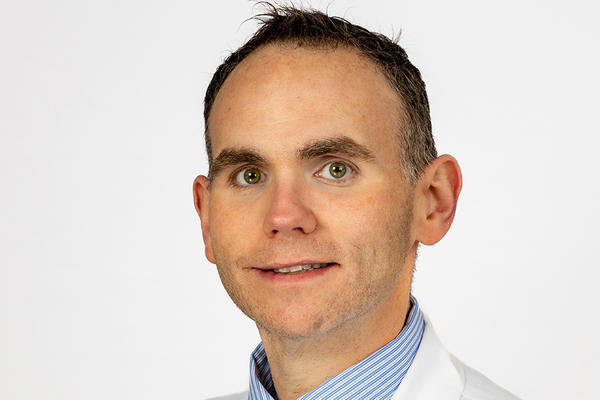
Robert W. Putnam, Ph.D.
Professor
Address: 011A Medical Sciences Bldg.
Phone: (937) 775-2288
E-mail: robert.putnam@wright.edu
University of California, Los Angeles, 1978
|
Research Interests:
My research focuses on the cellular neuroscience of respiratory control.
We study the neurons from the brainstem of neonatal rats and their response
to elevated levels of CO2. It is believed that these neurons play a
major role in controlling ventilation and our work is thus of relevance to
disorders that involve altered respiratory drive, such as sudden infant death
syndrome (SIDS) and sleep apnea. There are two main thrusts of our work:
Cellular Signals and Targets in CO2-sensitive Neorons: We
are looking at the cellular signaling pathways and the ion channel targets
involved in the sensing of elevated CO2 by central chemosensitive
neurons. This work involves pH and calcium sensitive fluorescent dyes to
study changes of intracellular pH and intracellular calcium and their role
in CO2-induced increased firing rate of these neurons. We also
employ electrophysiological techniques to study the change in electrophysiological
properties of these neurons as well as using immunohistochemical and voltage
clamp techniques to characterize the ion channel targets of the chemosensitive
signals. We have recently begun studies to alter central chemosensitivity
in rats to determine the cellular alterations that correlate with the altered
central chemosensitivity. We are also developing a mathematical model of
excitability in central chemosensitive neurons to determine the channels,
signals and properties that make a neuron chemosensitive.
Development of Central Chemosensitivity: We have done some of the
first studies to fully characterize the development of the CO2 responsiveness
of ventilation in neonatal rats. Our studies suggested a triphasic pattern
of development, with an early neonatal form of chemosensitivity that gives
way after 2 weeks to an adult form of chemosensitivity, and a critical window
of minimal chemosenstivity at week 1. We are also studying the development
of chemosensitivity in individual neurons within various chemosensitive regions.
Finally, we are examining which brainstem regions are responsible for each
type of chemosensitivity and the effects of chronic exposures to hypercapnia
or hypoxia on these developmental patterns.
Selected Publications:
Rittuci NA, Erlichman JS,
Leiter JC, Putnam RW (2005) The response of membrane potential and intracellular
pH to hypercapnia in neurons and astrocytes from rat retrotrapezoid nucleus.
Ameri J Physiol Regul Intergr Comp Physiol 289:R851-R861.
Putnam RW, Filosa JA, Ritucci
NA (2004) Cellular mechanisms involved in CO2 and
acid signaling in chemosensitive neurons. Amer J Physiol Cell Physiol 287:C1493-C1526.
Dean JB, Mulkey DK, Henderson
III RA, Potter SJ, Putnam RW (2004) Hyperoxia, reactive oxygen species, and
hyperventilation: oxygen sensitivity of brain stem neurons. J Appl Physiol
96:784-791.
Mulkey DK, Henderson III
RA, Ritucci NA, Putnam RW, Dean JB (2004) Oxidative stress decreases intracellular
pH and Na+/H+ exchange
and increases excitability of solitary complex (SC) neurons from rat brain
slices. Amer J Physiol Cell Physiol 286:C940-C951.
Filosa JA, Putnam RW (2003)
Multiple targets of chemosensitive signaling in locus coeruleus neurons:
Role of K+ and CA2+ channels.
Amer J Physiol Cell Physiol 284:C145-C155.
Mulkey DK, Henderson III
RA, Putnam RW, Dean JB (2003) Hyperbaric oxygen and chemical oxidants stimulate
CO2/H+-sensitive neurons in rat brain stem slices. J Appl Physiol 95:910-921.
Mulkey DK, Henderson III
RA, Putnam RW, Dean JB (2003) Pressure (<4
ATA) increases membrane conductance and firing rate in the rat solitary complex.
J Appl Physiol 95:922-930.
Dean JB, Mulkey DK, Garcia
III AJ, Putnam RW, Henderson III RA (2003) Neuronal sensitivity to hyperoxia,
hypercapnia, and inert gases at hyperbaric pressures. J Appl Physiol 95:883-909.
Fiolosa JA, Dean JB, Putnam
RW (2002) Role of intracellular and extracellular pH in the chemosensitive
response of rat locus coeruleus neurones. J Physiol (London) 541.2:493-509.
Stundent CE, Filosa JA,
Garcia AJ, Dean JB, Putnam RW (2001) Development of in
vivo ventilatory and single chemosensitive neuron responses to hypercapnia
in rats. Respir Physiol 127:135-155.
Putnam RW (2001) Intracellular
pH regulation of neurons in chemosensitive and nonchemosensitive areas of
brain slices. Respir Physiol 129:37-56.
Dean JB, Kinkade EA, Putnam
RW (2001) Cell-cell coupling in CO2/H+-excited
neurons in brainstem slices. Respir Physiol 129:83-100.
Mulkey DK, Henderson III
RA, Olson JE, Putnam RW, Dean JB (2001) Oxygen measurements in brainstem
slices exposed to normobaric hyperoxia and hyperbaric oxygen. J Appl Physiol
90:1887-1899.
Chambers-Kersh L, Ritucci
NA, Dean JB, Putnam RW (2000) Response of intracellular pH to acute anoxia
in individual neurons from chemosensitive and nonchemosensitive regions of
the medulla. In: Oxygen sensing: molecules to man (Lahiri S, Prabhakar N,
Forster II RE, eds), pp 453-464. New York: Kluwer Academic/Plenum.
Recent Funding:
2001-2006 -- Intracellular pH Responses of Central Chemoreceptors, National
Institutes of Health Research Grant (NIH R01 HL 56683); PI: R.W. Putnam; Co-PI:
J.B. Dean. $1,022,400.
2003-2006 -- Cellular Mechanisms of Central Nervous System and Pulmonary
Oxygen Toxicity, Office of Naval Research (ONR), Undersea Medicine Program
(N00014-04-1-0172); PI: J.B. Dean; Co-PIs: R.W. Putnam and R.A. Henderson III.
$739,705.
2005-2006 -- Hyperbaric Atomic Force Microscopy (AFM) Studies of Oxygen
Toxicity, Office of Naval Research (ONR), Undersea Medicine Program (N00014-05-1-0519);
PI: J.B. Dean; S. Higgins. $378,000.
2005-2006 -- Neural Plasticity during Acclimatization to Hypoxia, National
Institutes of Health Research Grant (NIH R01 HL 81823); PI: F.L. Powell; PI
on subcontract: R.W. Putnam. $77,278.
2005-2007 -- Effects of Chronic Hypercapnia on Chemosensitive Neurons, Ruth
L. Kirschstein National Research Service Award (NIH F32 HL 080877); PI: L.K.
Hartzler; Sponsor: R.W. Putnam. $86,044.
|