Nearly 1,500 students graduate at Wright State’s spring commencement ceremonies
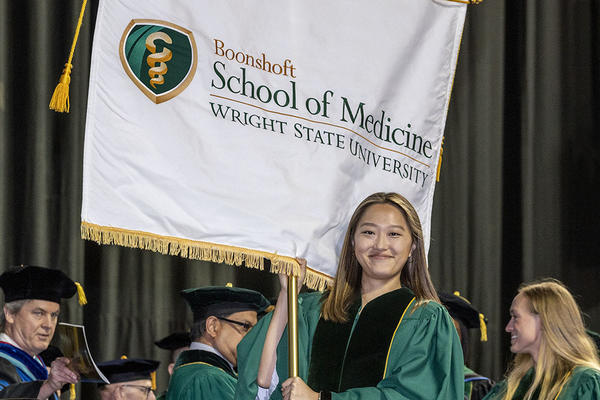
Nearly 1,500 students graduated during Wright State University’s spring commencement ceremonies in the Wright State University Nutter Center on April 26 and April 27.


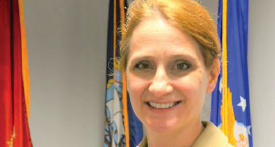
Juliann Althoff, M.D., an Ohio native, has returned to Dayton to continue assisting in research and to oversee operations for the Naval Medical Research Unit Dayton (NAMRU-D). The organization's mission is to optimize the readiness, performance, and survivability of operational forces through environmental health effects, toxicology, and aerospace medical research and development.
Continue reading in Vital Signs

Mortality and morbidity conferences, which are departmental reviews of cases with less-than-ideal outcomes, have long been a part of medical education in nearly every specialty. They serve as a natural stage for the examination of systematic inequities in health care.
Continue reading in Vital Signs
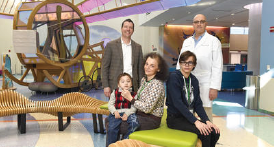
In April 2021, a 4-year-old underwent a novel brain surgery at Dayton Children’s Hospital. With four catheters inserted through the little boy’s skull, the surgeon injected into his brain a fluid containing over 37 trillion viral particles, each containing DNA for a human gene, a first-of-its-kind experimental gene therapy for Canavan disease.
Continue reading in Vital Signs