


School of Medicine | Research Affairs | Contact Us | Contents
Research Enterprise
Internet Update
June 2003

Building a Truly Engaged Community
Through Participatory Research

By William N. Tindall, Ph.D., R.Ph., Mark E. Clasen M.D., Ph.D.,
and Cecelia Ann Smith, CHRA
WSU Department of Family Medicine

Wright State University School of Medicine has a long history of responding to community needs, and now there are even more means and opportunities to do so in concert with community stakeholders such as civic groups and neighborhood priority boards. In 2002, the National Science Foundation reported the U.S. federal government spent $80 billion, and the private sector spent $140 billion, on research. Very little of these vast resources were spent on community based, participatory research. During the past decade, traditional, population based biomedical research has been challenged due to its limited community participation. As more and more people accept that idea, more resources are being made available for participatory research. Now, one of the prestigious NIH institutes, the National Institute of Environmental Health Sciences (NIEHS), has assumed a leadership role and is funding a number of health outcomes initiatives using participatory research methods to improve public health. These commitments are based on the evidence that researchers can benefit from using community based collaborating partners to help refine, identify, and validate research questions. Further, involving community stakeholders in research means and methods has been found to result in more practical information and solutions on which better policies, decisions or action steps can be built. This in turn leads to improved communities for a modern world.

"To change something, build a new model"
- R. Buckminster Fuller
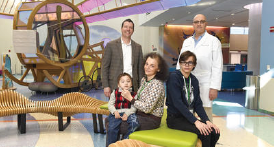
Photo of William Tindall and Cecilia Ann Smith

ARCH director William Tindall with community health research advocate Cecilia Ann Smith.

A: What Makes Participatory Research Different?

Participatory research enables people to generate practical answers about community needs and find better insights into action steps and policies that benefit their community. It is research conducted as a partnership between traditionally- trained researchers and lay participants in a community. Participatory research gives the study population two things: 1) a partnering voice in what is being studied and 2) the rudiments of research methodology so they can assume collaborative roles. Participatory research can be characterized best as "research which recognizes the community as a social and cultural entity with the active engagement and influence of community members in all aspects of the research process." (1)

Thus, participatory research brings community stakeholders and expert researchers together so they can act as equals when determining research questions, the approaches used to obtain information, and most importantly, what the research means and how it should be used to benefit a community.

Participatory research in a nutshell combines three activities: a) investigation, b) learning, and c) action. It is this third activity that causes participatory research to be labeled as "action research." This is because the knowledge that traditional research produces may be published, disseminated, shared, and even debated, but it is not always acted upon.

Participatory research then is different from traditional research in that it:
a. Builds community involvement in partnerships that are sustained throughout the research.
b. Builds, and leaves behind, skills, capacities, infrastructure and relationships between traditional research institutions and communities.
c. Builds assurances that data ownership, methods of dissemination, and authoring credits are done as collaborations and are well defined beforehand.
d. Builds solutions for a community using proactive approaches to resolve local issues with accurate and relevant information.
e. Builds culturally sensitive research using people who recognize that diversity exists in a community and there is a need to use appropriate and trust-building communication.
f. Shares power during a research activity so it is equitable between the community and the research institution.

B: Why Is There Support for Participatory Research Today?

There is growing interest in participatory research based on the belief that the detached, non-interactive, lone, academic researcher or institution represents a system that is "out of touch" with modern society. This interest also grew as community leaders realized the values and needs of those being studied was being ignored by those conducting traditional research. Thus, participatory research is a means for accepting a community's values and seeing these values, needs, and experiences as integral to a researchers' thinking and moral sensibilities. If research is to result in findings that are practical, culturally appropriate, and that answer "what must we do and how best can we do it?", the researcher and the researched community must work together. It is well documented that much research has failed to ameliorate social and economic conditions or effect change (2), contributing to the alienation of the people being studied. (3) In addition it is well documented that minority communities distrust researchers, not only because of their cultural inappropriateness but because:
a. Traditional research gets used inappropriately, is taken out of context, or is used for financial gain to the researcher with no benefit to the community (4);
b. Traditional reporting of research has traumatized or stigmatized a community (5);
c. Traditional research lacks relevance and fails to provide insights of practical, social use. (6)

C: How is Participatory Research Conducted?

Participatory research is built on partnerships between researchers and the people being studied. When they work together, such partnerships:
a. Identify common problems and needs.
b. Validate the experiences of people as a way to better understand them.
c. Present to the community results of work that have produced new knowledge upon which they can rely to make social change.
d. Link research results to political realities in hope they will be translated into action.

Participatory research methods are more than conducting simple sampling techniques and administering a survey. It begins by extensive gathering of people's experiences, backgrounds, values, and needs using focus panels and other social science techniques. This leads to the community articulating its feelings about a problem into a researchable question. In this first or early stage researchers must be culturally competent about how a community perceives itself and those in it. A critically sensitive role for the researchers also exists in that they must demystify research methods in such a way as to build community trust so that community stakeholders will want to stay involved throughout the study and help with the development of solutions that affect them. Participatory research does not create a theory or test a hypothesis rather; it evaluates relevant and practical ideas.

There are many examples of participatory research in the recent literature answering questions such as: How could we decrease infant mortality rates in a Genesee County African American community? (7) What are the culturally appropriate interventions to increase breast and cervical cancer screening practices among native Hawaiian women? (8) How best can a community that has lost a major health resource provide care to children suffering from asthma? (9) What role does folk medicine play on the health needs of a community? (10) What policies or programs should a community implement to reduce the impact of smoking -related diseases on community resources? (11) How can primary care providers develop empowering strategies for low-income populations to help them deal with the inequities of nutrition? (12)

D: Why Should Wright State University Be Involved?

Community responsiveness is one of the founding principles behind Wright State University School of Medicine as well as for the Center for Healthy Communities (CHC). WSU President Kim Goldenberg, when he was medical school dean in 1996, wrote, " Individuals in the community must become empowered to capitalize on their strengths, and to discuss the major difficulties that the community and the academic institutions encounter and strategies for meeting them, such as the importance of building trust and the importance of learning needs identified by the community partners, not just those identified by the academic partners." (13) Since then, CHC and the Alliance for Research in Community Health (ARCH ), a project of the Wright State Department of Family Medicine, are embracing participatory research by involving people normally shut out from research and information gathering. CHC and ARCH believe if research is to provide help to those who need it most, it makes sense to get community people involved in developing questions, determining methodology, and using research outcomes to help their community. Participatory research also makes sense for other Wright State researchers as well because it responds to the latest thinking about: Who owns new knowledge? How should new knowledge be produced? And how should new knowledge be used to effect a broader empowerment of the community from which is sprang?

CHC, ARCH, and Sinclair Community College have taken the first step of empowering the community by a) teaching research methodology to community health advocates in a formal training program at Sinclair Community College and b) hiring a community health advocate, a lay person well respected in the Dayton community, onto the Department of Family Medicine staff to help reach out to the community and build bridges that lead to helpful collaborations between the community and the WSU-School of Medicine.
Further, the department's involvement in participatory research centers on the encouragement of The North American Primary Care Research Group (NAPCRG) which has issued a lengthy policy statement containing these remarks, "Current developments in ethics and research methods, and an expanding recognition of what constitutes expert knowledge justify the heightened participation of individuals and communities. Primary care providers are uniquely positioned to engage members of the communities in which they work, thus sharing the research process." (14)

E: What are the Benefits to Wright State University?

Engaging in participatory research will benefit Wright State University in the following ways:
a. It helps fulfill the mission of WSU and the SOM .
b. It creates new trusting relationships within the community, helping to bridge cultural gaps.
c. It brings together disciplines that have had little or no history of collaborative work.
d. It increases student and graduate student participation in scholarly activity.
e. Its non-categorical nature opens many doors for external support.
f. It enhances the likelihood that behavioral change interventions will be adopted in a community in cost-efficient ways.
g. It enhances the relevance and use of research data by all the participants.
h. It provides resources and possible employment opportunities.

F: Advice to Wright State Researchers

For participatory research to be useful to the Dayton community, there is still much work to be done. For example:
a. Heighten awareness of the value of participatory research among traditional researchers by encouraging networks and education on its principals and practices.
b. Find more support from public and private funding agencies to support: planning grants, research partnerships, comprehensive approaches, and especially capacity building and training for participating partners.
c. Build a "library' of resources, case studies, and other participatory research outcomes to help faculty assess and model participatory research endeavors.
d. Develop a WSU resource such as an Internet site that offers to the community support services, planning facilitation, sample requirements, bibliographies, and advice on how to contact interested collaborators.

References

1. Schulz, AJ, Israel, BA, et al, Development and implementation of principles for community based research in public health, in Mc Nair RH (ed) Research: Strategies for Community Practice, pp83-110; New York: Haworth Press, 1998

2. Smith ,SE, Pyrch,T, Lizardi,AO, Participatory action Research, World Health Forum 1993; 14, 319

3. Abbott,K, Blair F. Duncan, S., Participatory Research, Canadian Nurse, 1993, Jan. 25; 7

4. Gamble VN. Under the Shadow of Tuskegee. Am. J. Pub Health, 1997; 87:1773-8.

5. Jensen RA, Outreach by the Handford Tribal Service Program, Cancer, 1996; 78:1607-11

6. Taubes, G, Epidemiology faces its limits, Science 1995; 269:164-9

7. See http://www.sph.umich.edu/prc/projects/reach.html.

8. Matsunaga DS, Enos R, Gotay OC et al, Participatory Research in a Native Hawaiian Community, Cancer, 1996; 78:1582-6.

9. See http://asthma.umich.edu/arc/.

10. Kreiger J, Allen C, Cheedle A, et al , Using Community Based Research to Address Social Determinants of Health, Health Education and Behavior, June 2002; 29(3):361-382

11. See The Guide to Community Prevention Services: Tobacco Use Prevention and Control, Am J Preventive Medicine 2001; http://www.thecommunityguide.org/tobacco/.

12. Mason R, Boutilier M., The Challenge of Genuine Power Sharing in Participatory Research: Can. J. Com. Mental Health, 1996; 15(2):145-2

13. Maurana C & Goldenberg, K, A successful academic-community partnership to improve the public's health, Academic Medicine, 1996; 71:425-431

14. North American Primary Care Research Group, Responsible research with communities: participatory research in primary care, Policy statement, Sept 14, 1998 p1.

Participatory Research Links

page divider

School of Medicine | Research Affairs | Contact Us | Contents


Last updated 06/20/03 (mw). For more information, contact Research Affairs.

javascript hit
counter