

Education:
M.D.: Peking Union Medical
College (Dian-dong Li and Yong-su Zhen)
Ph.D.: Biochemistry, Cell
and Molecular Biology Program, Johns Hopkins University School of Medicine
(Thomas J.
Kelly)
Postdoctoral: Harvard Medical
School (Irving H. Goldberg), Harvard School of Public Health (Bruce
Demple) and Memorial Sloan-Kettering Cancer Center (Thomas J. Kelly)
Research
Interests
Our
laboratory uses genetic and biochemical approaches to study one of the
fundamental questions in modern biology, the DNA replication checkpoint. The
replication checkpoint is a complex signal transduction pathway that protects
integrity of the genome by sensing perturbations of DNA replication and
eliciting counteracting cellular responses. If undetected, perturbed
replication forks become unstable and may undergo catastrophic collapse,
resulting in cell death or mutagenic chromosomal damage. Because of its
importance, the replication checkpoint is highly conserved from yeast to human.
Mutations in the pathway are linked to cancer. The main goal of the research
program is to understand how checkpoint signal is initiated and how perturbed
replication forks are stabilized by the replication checkpoint. We choose the
fission yeast Schizosaccharomyces pombe as primary working model organism
because unlike the branched signaling pathways in other model organisms, the
replication checkpoint in fission yeast is quite linear and simple.
Understanding the molecular mechanism of the replication checkpoint in fission
yeast will serve as a framework for examining the same pathway in human cells.
Progresses in our study will have great implications to cell cycle control,
oncogenesis and potentially, new strategies for cancer therapeutics.

Our
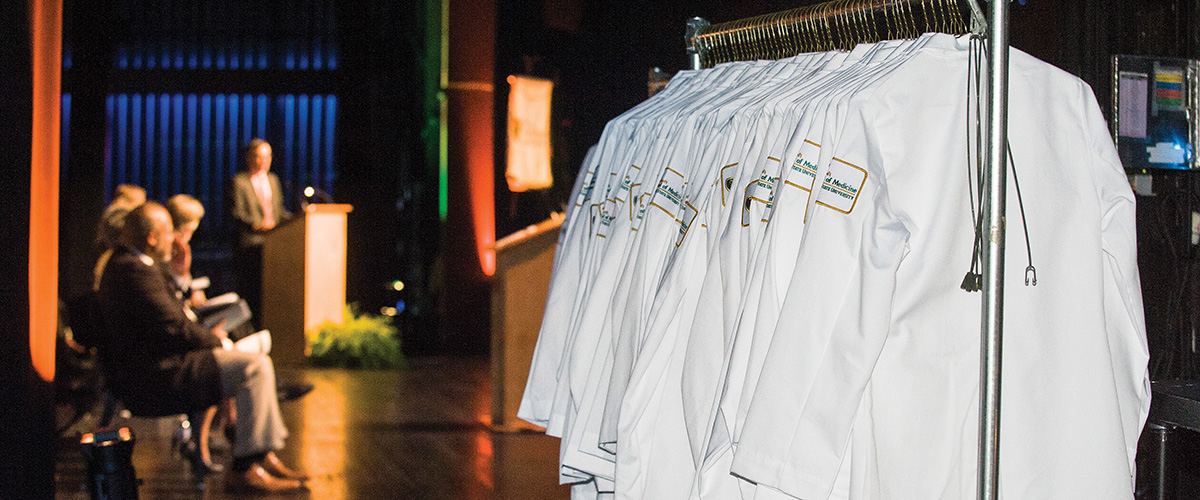
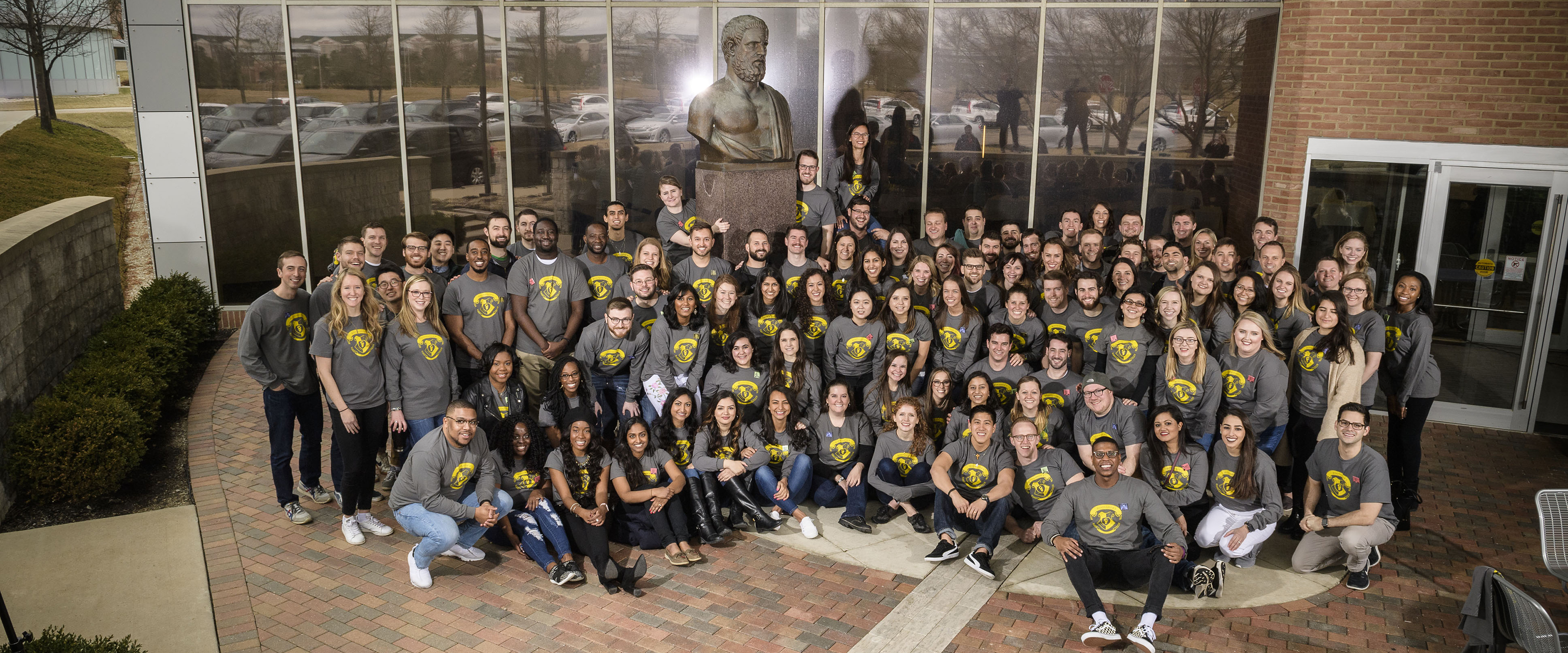
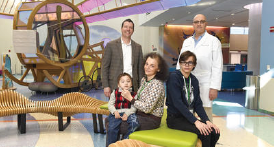
laboratory (above) is located in the new Diggs Laboratory Building (below). We welcome talented graduate students and motivated post-doctoral
fellows to join our research team.

Selected
Publications
- Xu YJ, Kelly TJ (2008) Autoinhibition and
autoactivation of the DNA replication checkpoint kinase Cds1 (submitted for
publication).
- Xu YJ, Davenport M,Kelly TJ (2006) Two-stage mechanism
for activation of the DNA replication checkpoint kinase Cds1 in fission yeast. Genes
& Dev. 20:990-2003
- Xu YJ DeMott MS, Hwang JJ, Greenberg MM,
Demple B (2003) Action of human apurinic endonuclease (Ape1) on C1'-oxidized
deoxyribose damage in DNA. DNA Repair 2:175-185
- Xu YJ, Kim E, Demple B (1998) Excision
of C4'-oxidized deoxyribose lesions from double-stranded DNA by human apurinic
endonuclease (Ape1 protein) and DNA polymerase ß. J. Biol. Chem. 273:28837-28844.
- Xu YJ, Xi Z, Zhen YS, Goldberg IH
(1997a) Mechanism of formation of novel covalent drug.DNA interstrand
cross-links and monoadducts by enediyne antitumor antibiotics. Biochemistry 36:14975-14984.
- Xu YJ, Zhen YS, Goldberg IH (1997b)
Enediyne C1027 induces the formation of novel covalent DNA interstrand
cross-links and monoadducts. J. Am. Chem. Soc. 119:1133-1134
- Xu YJ, Zhen YS, Goldberg IH (1995) A
single binding mode of activated enediyne C1027 generates two types of
double-strand DNA lesions: deuterium isotope-induced shuttling between adjacent
nucleotide target sites. Biochemistry 34:12451-12460.
- Xu YJ, Zhen YS, Goldberg IH (1994) C1027
chromophore, a new enediyne antitumor antibiotic, induces sequence-specific
double-strand DNA cleavage. Biochemistry 33:5947-5953.
- Xu YJ, Li DD, Zhen YS (1992) Molecular
mechanism of C1027, a new antitumor antibiotic with highly potent cytotoxicity
(Formation of abasic sites, single- and double-strand breaks in DNA and
selective cleavage in the linker regions of nucleosomes). Science in China (Series B) 8:814-819.
- Xu YJ, Li DD, Zhen YS (1991) Recent
advances in the research of macromolecular antitumor antibiotics. Chin. J.
Antibiot. 6:470-475.
- Xu YJ, Li DD, Zhen YS. (1990) Mode of
action of C1027, a new macromolecular antitumor antibiotic with highly potent
cytotoxicity, on human hepatoma BEL-7402 cells. Cancer Chemother. Pharmacol. 27:41-46.
|