|
Harvard’s Longitudinal Integrated Clerkship: An Innovative Model of Clinical Education
Wednesday, March 16, 2011
12:15 p.m. - 2:30 p.m.
Location
101 White Hall (Gandhi Auditorium)
Description
Most medical schools value and seek opportunities for students to learn through experiences in the longitudinal care of patients. A number of innovative programs have made longitudinal care the central experiential component of clinical education, including Harvard Medical School. In this session, Dr. David Hirsh, the cofounder and Director of the Harvard Medical School –Cambridge Integrated Clerkship (CIC) will share his experience and present the data, literature, and global reach of this transformation.
The CIC is a complete redesign of the principal clinical year to foster students’ learning from close and continuous contact with cohorts of patients in the core clinical disciplines. With year-long mentoring by clinical faculty, students follow their patients through all major venues of care. Didactics are case-based tutorials about core topics, deliberately connecting to the students’ actual patients, and actively integrating basic, clinical, and social sciences. Longitudinal integrated medical education is designed to progress developmentally and to centralize building the professional role. In addition to strict attention to building clinical skills, the structure focuses on reflective practice, humanism, peer-peer and interprofessional learning and assessment, communication skills, ethics, uncertainty, population sciences, cultural competence, and leadership.
Objectives
Participants will be able to learn about Longitudinal Integrated Clerkships (LICs):
-
Explain the goals, underlying principles, and the connection to the learning sciences
-
Describe the structure and implementation steps
-
Discuss evaluation methods and results
-
Depict the national and international scope of LICs
|
|
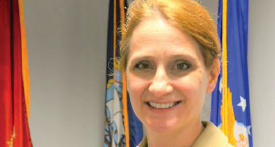
David Hirsh, M.D.
Co-founder and Director, Harvard Medical School–Cambridge Integrated Clerkship, Scholar of the Academy, and
Instructor in Medicine, Harvard Medical School
|
TurningPoint AnyWhere: Extending Clicker Capabilities to Poll in ANY Application
Wednesday, May 11, 2011
12:15 p.m. - 2:15 p.m.
Location
101 White Hall and 261 Computer Lab
Description
TurningPoint AnyWhere is an application that allows you to expand clicker interactive capabilities beyond PowerPoint to poll from content in whiteboard software, web browsers, PDFs, Word documents and more - you choose. This two-part workshop will start with a luncheon demo for participants to learn about the dynamic capabilities of TurningPoint AnyWhere. The second part will be a hands-on session in the computer labs for you to learn how to poll in any application. Topics include: software setup; basic polling; dynamic polling; countdown timer; question list; participant list; response/non response grid and reports.
Objectives
Participants will be able to:
-
Create interactive TurningPoint AnyWhere presentations
-
Implement question and participant lists to receive student and audience feedback
-
Generate reports based on TurningPoint AnyWhere data
|

|
Robert McMillen
Higher Education Implementation Specialist, Turning Technologies
|
Multiple-Choice Exam: Transforming Questions into Clinical Vignettes that Effectively Test the Application of Knowledge
Thursday, August 11, 2011
12:15 p.m. - 3:15 p.m.
Location
008 Rathskeller, WSU Student Union
Description
This workshop will enable participants to transform the tedious chore of writing multiple-choice questions (MCQs) into an exercise that fosters critical thinking among learners, with a focus on developing questions with a clinical vignette focus that tests the application of knowledge. Both qualitative and quantitative features that determine the quality of multiple-choice questions will be defined and used to analyze sample questions.
Objectives
Participants will be able to:
-
Apply criteria to identify flaws in MCQs, and practice transforming flawed MCQs into better questions
-
Discriminate among three levels of learning assessed by MCQs, and determine which level is addressed by a sample MCQ
-
Define difficulty index and discrimination factor, and apply these quantitative data to analyze MCQs
-
Apply a quantitative method for constructing an MCQ exam to achieve a predictable mean score, based on historical data in an exam question bank
-
Practice transforming basic science knowledge questions into clinical vignette questions
Resources
|
|
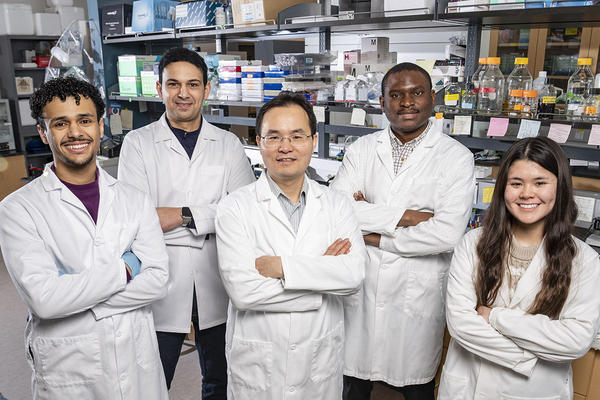
Paul Koles, M.D.
Associate Professor and Chair,
Pathology
Brenda Roman, M.D.
Professor, Director of
Medical Student Education,
Psychiatry
|
|
Research in Medical Education: You Don’t Need to Know Greek to Understand Statistics
Wednesday, October 19, 2011
12:15 p.m. - 2:15 p.m.
Location
101 White Hall
Description
This session will provide an overview of basic statistics which will include application of principles learned using medical education research examples.
Objectives
Participants will be able to:
|
|
Sabrina M. Neeley, Ph.D., M.P.H.
Director, Physician Leadership Development Program, and Assistant Professor, Center for Global Health Systems and Policy
|